
Bespoke Workplace Investigations Training: Why Context Matters
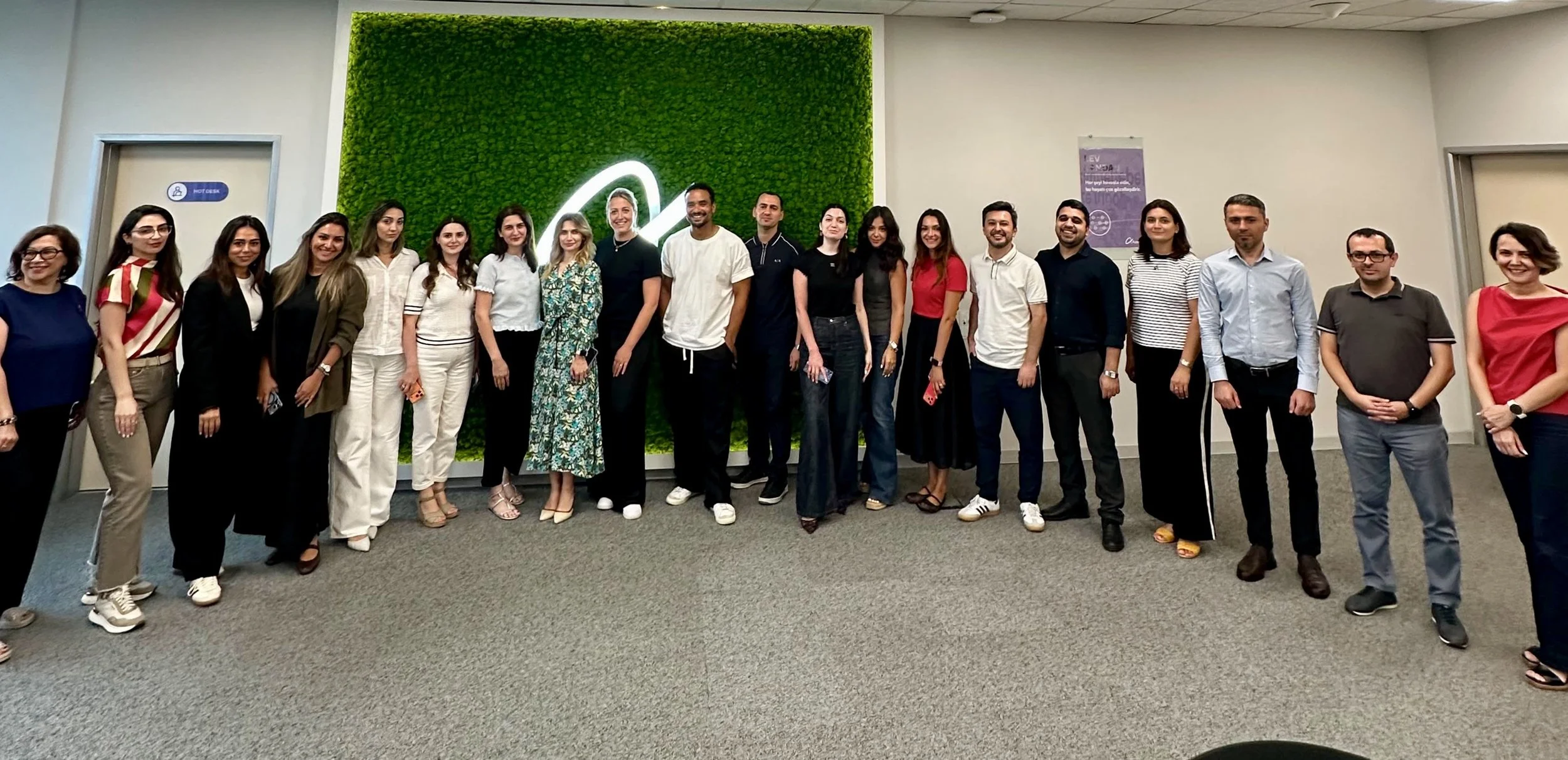
EthicsVision International workplace investigations course - Baku, August 2026
Over the summer, EthicsVision International designed and delivered three very different workplace investigations training programmes.
One was for a major bank in Oman. Another was for a major international aid organisation in the Netherlands. The third was for a leading telecommunications company in Azerbaijan.
All three programmes were delivered to cross-functional teams. All covered core investigation skills. Beyond that, they looked very different.
That is the point.
When organisations ask us to design bespoke workplace investigations training, we do not begin with an existing course and work out where to insert their logo. We start by understanding the organisation itself.
Its sector. Its structure. Its policies and procedures. The people who conduct investigations. The functions that become involved. The kinds of concerns they are likely to encounter. The environment in which their investigators have to make decisions.
Only then do we begin designing the programme.
What does bespoke investigations training actually mean?
“Bespoke” has become a fairly elastic word in professional training. A standard programme with a few customised examples may be perfectly appropriate in some circumstances. But when an organisation wants to develop genuine investigation capability, particularly across several functions, we think there is value in going considerably further.
Our preparation can include reviewing investigation procedures, whistleblowing or Speak Up policies, codes of conduct, disciplinary processes and other relevant internal documents. We speak with key stakeholders to understand how concerns are currently received and managed, where responsibilities sit and where people encounter difficulties in practice.
For international investigations training there is another layer. We consider the legal, cultural, regulatory and operational environment in which participants work.
The principles of a fair, objective and evidence-based investigation travel well. How those principles are applied will inevitably be influenced by context.
A financial institution in the Gulf does not operate in the same environment as an international aid organisation in Europe. A telecommunications business may encounter different records, compliance risks and internal stakeholders again.
If the training ignores those differences, an opportunity has been lost.
Creating a training environment that feels familiar
For many of our programmes, we create a fictional organisation specifically for the client. It is not a copy of their business, nor is it based on a live internal case. Instead, we build something recognisable enough to make the training immediately relevant.
Participants become investigators within that fictional organisation for the duration of the course. They receive a workplace concern and have to decide what to do with it.
What is actually being alleged?
Are there immediate risks?
Who needs to be involved?
What should be preserved?
Which policies apply?
Is there enough information to begin an investigation, or does something need clarifying first?
As the programme develops, so does the case. New information appears. Evidence needs to be assessed. Witnesses have to be interviewed. Earlier assumptions may need to be reconsidered.
The case provides a thread running through the course, connecting instructor-led learning with practical investigation decisions. It also stops the training becoming a series of disconnected exercises.
Participants are not simply learning how to write Terms of Reference at 10am and how to interview a witness at 2pm. They are applying both skills to an investigation they already understand and have become invested in.
Using the client's own policies and processes
Where appropriate, we incorporate an organisation's existing policies and investigation processes into the programme. That creates an important shift. Instead of asking, “What does good practice say an investigator should do?”, participants can also ask, “What would we actually do here?”
Sometimes those answers align neatly. Sometimes they prompt useful discussion.
A policy may leave room for interpretation. Different functions may understand a process differently. People may discover that a responsibility everyone assumed was clear is not clear at all. These conversations are valuable because investigation capability is not only about the skill of the individual investigator. The surrounding system matters too.
A well-trained investigator working within unclear processes, competing responsibilities or inconsistent organisational expectations will still encounter difficulty. Bespoke training gives organisations an opportunity to look at both.
International investigations training should reflect international realities
This is particularly important for organisations operating across borders. Many multinational organisations want a consistent investigation standard across their business. That makes sense. Employees should be able to expect concerns to be handled professionally and fairly wherever they work.
Consistency, however, does not require pretending every operating environment is identical.
Organisations delivering investigations across Europe, the Middle East, Africa and Asia may need to navigate very different employment frameworks, regulatory expectations, corporate structures, evidence sources and workplace cultures. International investigations training should equip people to apply sound investigative principles within those realities.
It should also recognise that cross-border organisations often bring together colleagues with different professional backgrounds and different assumptions about how workplace concerns should be handled. Those differences deserve space in the training rather than being treated as an inconvenience.
Practical learning rather than passive learning
Our programmes combine instructor-led learning with casework, group discussion, evidence exercises and role play. Participants might move from learning about investigation planning directly into deciding how to scope the case they are working on.
A session on evidence is followed by new material landing in the investigation file. Interview training leads into witness or subject interviews. Analysis and report-writing sessions take place against evidence participants have spent time gathering and testing.
The result is a continual cycle of learning, application and feedback. It also allows instructors to see whether a concept has genuinely been understood.
Someone can nod along with a presentation about investigative objectivity. Applying that principle when a new piece of evidence appears to confirm a theory they formed earlier is rather different. That is where practical training earns its keep.
Building investigation capability internationally
EthicsVision International designs and delivers bespoke workplace and corporate investigations training for organisations in the UK and internationally.
Our recent programmes have included banking, telecommunications and international development, with participants drawn from a range of functions.
We work with organisations looking to develop investigation capability across HR, Employee Relations, Ethics, Compliance, Legal, Internal Audit, Security, Safeguarding and dedicated investigation teams.
Training can be delivered in person or virtually and can cover the full investigation lifecycle or focus on particular skills such as investigative interviewing, evidence assessment or report writing.
For organisations operating across the Middle East, Africa, Asia, Europe and other international markets, the starting point remains the same: Understand the organisation first, then build the training around the work its people actually need to do.
Will Richards of EthicsVision International delivering bespoke workplace investigations training to a cross-functional team at a major bank in Oman.
