
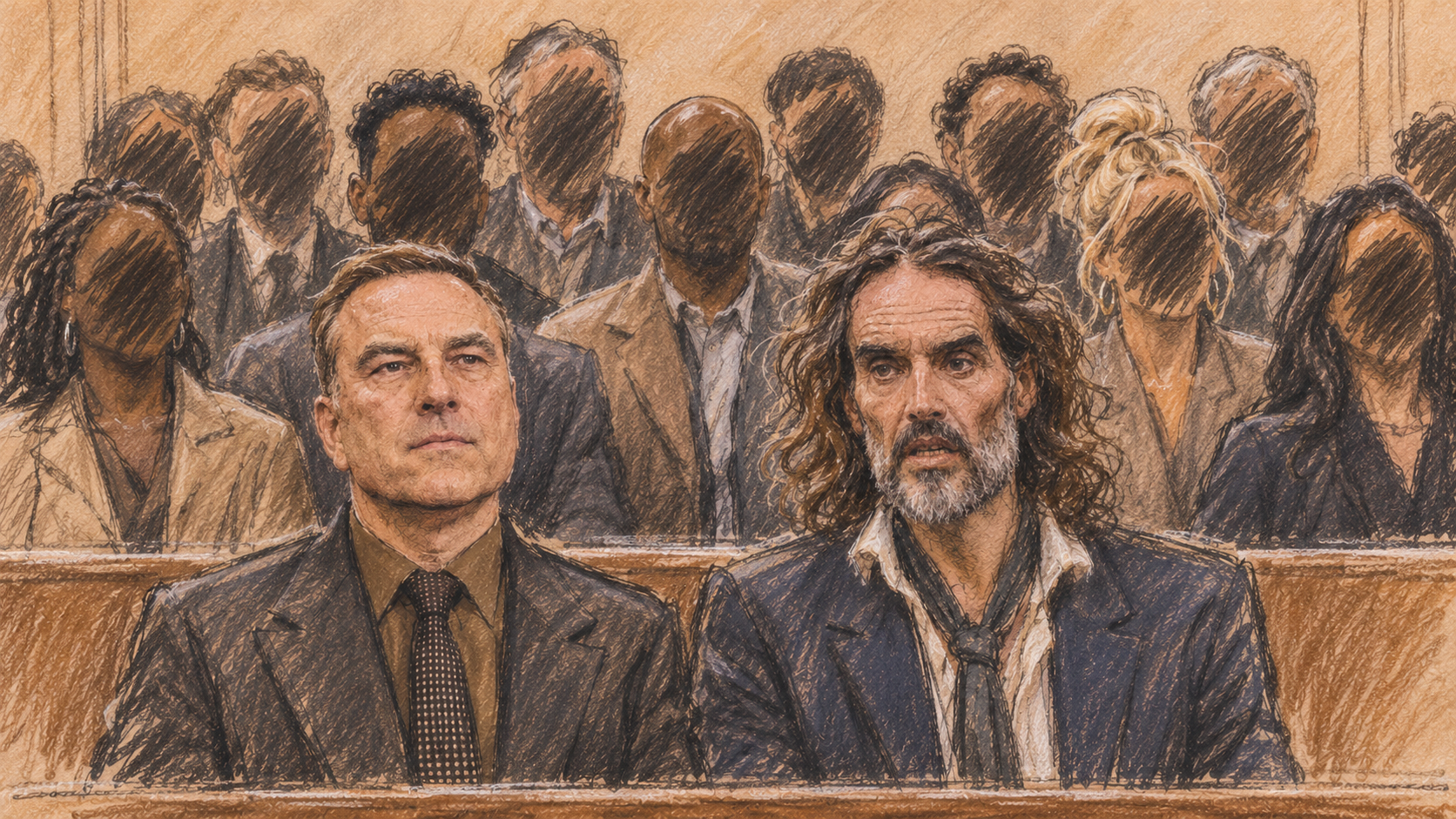
Why trusted reporting mechanisms are more important than ever in an industry where reputation, relationships and power can determine careers.
Words by William Richards | Founder, EthicsVision International | Former BBC Head of Whistleblowing
It has been a particularly thought-provoking week for me. Having established and managed the BBC's first dedicated whistleblowing team, I've followed the sentencing of Russell Brand and the publication of serious allegations against David Walliams with considerable interest.
Brand was sentenced to ten and a half years in prison following his conviction for rape and sexual assault. Walliams faces allegations of sexual misconduct and inappropriate behaviour, which he denies. While the legal circumstances are very different, both cases have brought renewed attention to the culture of the British television industry, and particularly its historic willingness to accommodate the behaviour of powerful and commercially valuable individuals.
For many people who have worked in the industry, the issues being discussed will be depressingly familiar.
The question now is whether the industry has genuinely changed enough to prevent similar situations from developing today.
An industry built on complicated power relationships
Television presents some particular challenges when it comes to workplace culture and accountability.
There are significant power imbalances between those appearing on screen, the people working behind the scenes and the senior executives responsible for commissioning and managing programmes. These relationships become particularly complicated when a successful presenter or performer can attract an audience that a broadcaster desperately needs.
With traditional television audiences declining, competition from streaming services intensifying and commissioning budgets under pressure, commercially successful talent can wield considerable influence.
There is also the question of who is actually responsible for the people working on a programme.
A show might be commissioned and broadcast by a major organisation such as the BBC, ITV or Channel 4, but produced by an independent production company, sometimes in collaboration with several others. Much of the workforce, including on-screen talent and production crews, may be self-employed or engaged on short-term contracts.
The organisation carrying the greatest reputational risk if something goes wrong may have no direct employment relationship with the people involved.
This presents a significant challenge when allegations need to be investigated. Larger broadcasters are generally more likely to have access to experienced HR, legal and investigations teams, while smaller independent production companies may lack both the in-house expertise and the budget to conduct complex investigations effectively.
But how does one organisation investigate allegations involving people engaged by another, legally independent company? Who has responsibility for commissioning and overseeing an investigation, obtaining evidence, interviewing witnesses and acting on the findings? These arrangements are not always clearly established in commissioning contracts or agreed ways of working between organisations.
Without clarity about who is responsible, and how the different organisations are expected to cooperate, there is a risk of delays, disputes over responsibility and ultimately a failure to address concerns properly.
Relationships with high-profile talent can also be sensitive, often managed through agents and representatives. Maintaining those relationships may be commercially important to several organisations simultaneously. In that environment, challenging someone's behaviour can become considerably more complicated than simply raising a concern with a line manager.
And for a junior member of a production team, it may not even be clear which organisation they should approach.
The cost of being seen as difficult
Television has historically been an industry in which reputation and personal relationships play an enormous role in securing work.
Production teams are frequently assembled through informal networks, recommendations and previous working relationships. Being regarded as someone who fits into a team, works hard and doesn't cause problems can be essential to securing the next contract.
For junior staff, particularly runners and those starting their careers, there has also been a longstanding expectation that they should earn their stripes. Being shouted at, humiliated or treated poorly has sometimes been regarded as an unfortunate but necessary part of learning the ropes.
When that becomes normalised, the threshold for recognising and challenging unacceptable behaviour can become dangerously high.
This can be compounded by the attitudes of the very managers to whom junior staff might turn for support. Many will have progressed through the industry having experienced similar treatment themselves, perhaps coming to accept it as simply part of working in television. Having endured that culture earlier in their own careers, they may be more inclined to regard such behaviour as normal, minimise its seriousness or expect younger colleagues to tolerate the same treatment. In this way, poor practices can be perpetuated across generations of production staff, with those in positions of responsibility sometimes failing to recognise or properly address the very behaviours they should be challenging.
Someone who raises concerns may find themselves labelled difficult, disruptive or simply not worth the trouble. They might never be explicitly blacklisted, but in an industry where the next opportunity often comes through a personal recommendation, the consequences can be just as significant.
This vulnerability is not limited to junior production staff.
Psychologists supporting reality television programmes, on-set chaperones, intimacy coordinators and others specifically engaged to protect people's welfare can face their own pressures. Where these professionals are contracted by the production company, there can be an understandable concern that challenging decisions too forcefully, or making production arrangements more difficult, could affect their chances of being engaged again.
The people tasked with protecting others need to be confident that doing their jobs effectively will not jeopardise their own livelihoods.
Cultural progress in an increasingly precarious industry
There has undoubtedly been progress in recent years.
Expectations around sexual harassment and misconduct are better understood, standards have become more explicit, and organisations are generally more conscious of their responsibilities. Industry initiatives and greater public scrutiny have helped challenge behaviours that were previously dismissed or tolerated.
There is evidence of improvement, too. The Film and TV Charity's 2026 Looking Glass report found that 37% of respondents had experienced bullying, harassment or discrimination in the preceding 12 months, down from 41% in 2024 and 53% in 2021.
That progress is encouraging. But the latest figure still represents more than one in three respondents, and we should be very cautious about assuming that changing attitudes alone will protect people.
In some respects, the current state of the industry may make workers just as vulnerable to abuse and exploitation as they were in the past.
The financial pressures facing British television are substantial. In June 2026, the BBC announced 550 job cuts as part of plans to save £500 million. Channel 4 subsequently proposed reducing its workforce by approximately 340 roles, equivalent to 28% of its headcount.
These pressures extend well beyond the major broadcasters, affecting independent production companies and the freelancers who depend on them. For many people working in television, a paid contract has become gold dust. If the culture on a particular production is poor, leaving and finding another opportunity may simply not be financially realistic.
And where future work depends on maintaining relationships and protecting a professional reputation, the perceived consequences of raising concerns can be enormous.
The 2026 Looking Glass findings reinforce this point. According to industry reporting on the survey, 51% of those affected by bullying, harassment or discrimination did not report their experiences because they feared losing future work or making the situation worse.
That should be a significant warning to organisations that assume the absence of complaints is evidence of a healthy workplace culture.
Why trusted speak-up mechanisms matter more than ever
This is why I believe trusted, effective and genuinely accessible speak-up mechanisms are more important than ever in the media industry.
People need a safe way to raise concerns without having to navigate the very management structures or professional relationships that may be contributing to the problem.
That means confidential reporting channels, routes that bypass line management and, where appropriate, the option to report anonymously. Importantly, anonymous reporting systems should allow secure two-way communication, enabling investigators to ask questions and provide updates without requiring individuals to disclose their identities.
These mechanisms also need to work for the realities of the industry. Freelancers, contractors, production staff and on-screen talent should all understand how to access them, regardless of which organisation formally engages them.
But simply introducing a reporting platform is not enough.
Trust depends on what happens after a concern is raised. Reports must be assessed appropriately, managed consistently and escalated where necessary. Organisations need to demonstrate that concerns involving commercially valuable individuals will receive the same level of scrutiny as those involving anyone else.
That is particularly important where several companies share responsibility for a production. Clear arrangements for receiving, managing and escalating concerns are essential to preventing them from falling between organisational boundaries.
The Creative Industries Independent Standards Authority (CIISA) has taken an important step forward with the launch of its independent confidential reporting service in October 2026. As an officially designated whistleblowing body, CIISA provides an additional route for people working across television, film, music and theatre to raise concerns about harmful practices. Its initial service is primarily focused on identifying patterns and systemic issues, rather than investigating and resolving individual complaints.
It is a welcome development, particularly for those who feel unable to approach the organisations they work with. However, it cannot replace the responsibility of broadcasters and production companies to establish effective reporting arrangements of their own.
Getting the response right
Having a trusted reporting mechanism is only part of the equation. Organisations must also have the expertise and independence needed to respond effectively.
Investigations into sexual misconduct, bullying and abuses of power require particular care, especially where the individuals involved may have experienced trauma or fear serious professional consequences.
Investigators need to understand trauma-informed, survivor-centred practices, while maintaining procedural fairness and avoiding prejudgement. They must be capable of protecting confidentiality, assessing evidence sensitively and identifying the wider organisational factors that may have allowed harmful behaviour to continue.
Sometimes a formal investigation will be appropriate. In other circumstances, a broader cultural review or targeted intervention may be necessary to understand patterns of behaviour, address systemic weaknesses and rebuild confidence.
For productions involving multiple organisations, this also means establishing clear contractual arrangements for investigating concerns, including responsibility for commissioning investigations, cooperation between parties, access to evidence and oversight of the process.
The response needs to be proportionate, independent and informed by a proper understanding of the environment in which the concerns have arisen.
We cannot afford to be complacent
The focus on Russell Brand and David Walliams this week is dispiriting, but for many people familiar with the television industry, it is unlikely to be entirely surprising. There is a temptation to regard these stories as reminders of a different era, when attitudes were less enlightened and inappropriate behaviour was more readily excused.
I think that would be a mistake.
The pressures that make people vulnerable to abuse, and reluctant to challenge it, remain deeply embedded in the way the industry operates. Indeed, financial insecurity and competition for work may now be amplifying some of those pressures.
Improving workplace culture is essential, but we cannot rely on cultural change alone. People need practical, trusted mechanisms that allow them to speak up safely, and confidence that their concerns will be handled properly, regardless of who is involved.
At EthicsVision International, we support organisations to develop, implement and manage effective whistleblowing and speak-up arrangements, including confidential reporting channels, case management and independent investigations.
We also deliver specialist training in workplace investigations, trauma-informed practices and the effective handling of sensitive concerns.
For broadcasters, production companies and others working across the creative industries, investing in these capabilities is an important part of protecting people, strengthening accountability and building workplaces where concerns can be raised without fear of professional consequences.
