
Why Cross-Functional Investigation Training Matters
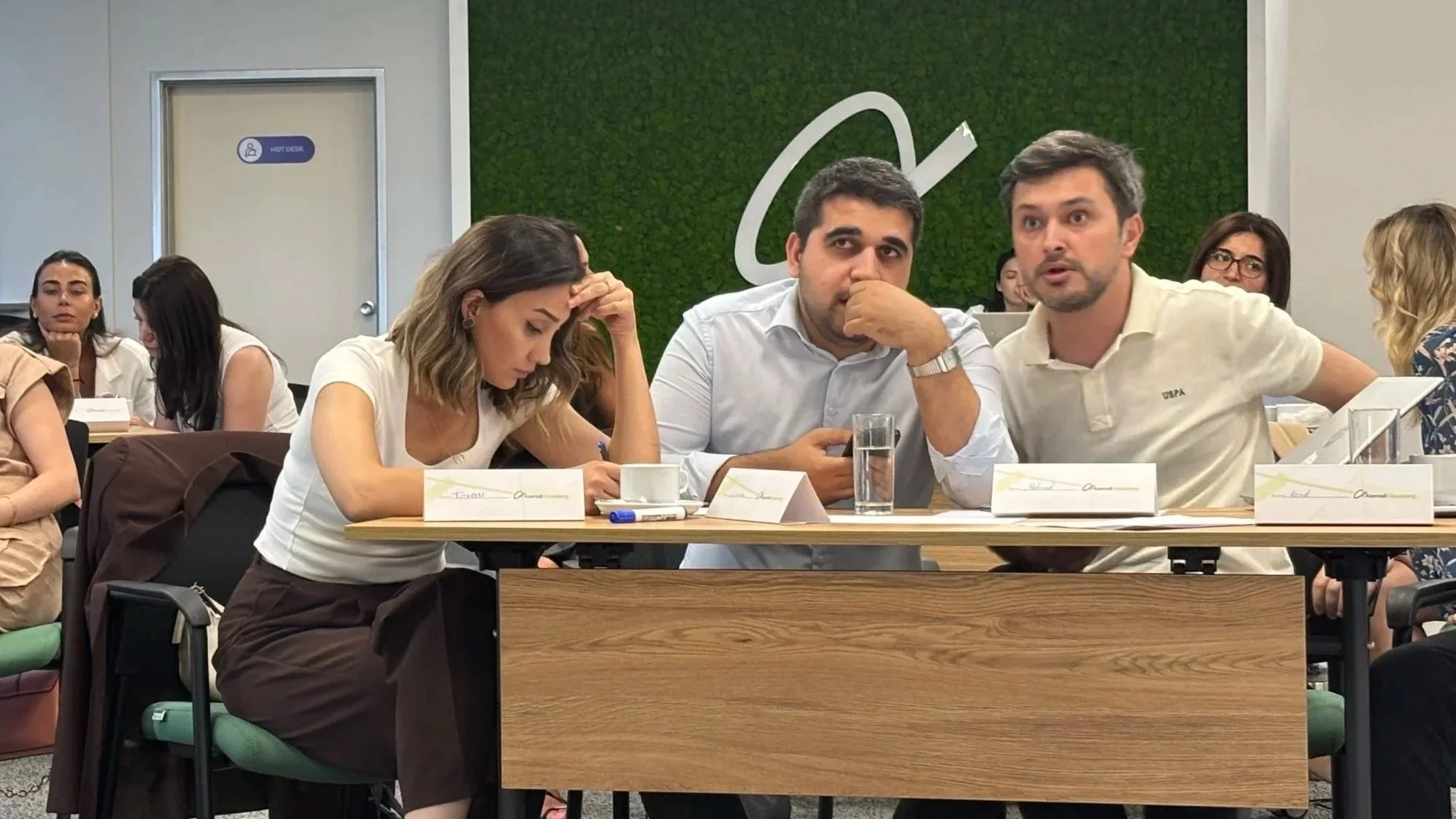
A cross-functional team in Baku, Azerbaijan participating in an EthicsVision International workplace investigations course
One of the things we see repeatedly when delivering workplace investigations training is how differently people can interpret the same set of facts, depending on the function they work in.
Give the same workplace concern to colleagues from HR, Compliance, Legal, Internal Audit and an investigations team and they are unlikely to approach it in exactly the same way. That is not necessarily a problem. Each person brings a different type of experience and is likely to notice different risks, questions and implications.
The difficulty comes when those different perspectives are not well understood across the organisation, particularly when a complex case requires several functions to work together.
That is one reason we place so much value on cross-functional investigations training.
Complex investigations rarely sit neatly within one function
Organisations may have a clear nominal owner for investigations, but many workplace concerns quickly stretch beyond a single area of responsibility.
A grievance might include allegations of misconduct. A fraud concern may reveal questions about management behaviour or internal controls. A whistleblowing report could have employment, financial, regulatory and safeguarding implications at the same time.
Once that happens, the investigation is no longer simply about identifying who will conduct the interviews and write the report. The organisation also has to decide who needs to be involved, where responsibility for different risks sits, what information can be shared, which processes apply and when specialist input is needed.
Those decisions are much easier to think through in training than for the first time during a sensitive live case.
Our cross-functional programmes are therefore designed not only to develop investigation skills, but to give colleagues an opportunity to explore how their different responsibilities fit together in practice.
Different professional perspectives can strengthen an investigation
When participants from different functions work through the same investigation scenario, the value of those different perspectives becomes obvious very quickly.
An HR colleague may recognise the employee relations implications of a proposed step that someone from another discipline would not immediately see. Finance or Internal Audit may spot the significance of a transaction or control weakness. Compliance may identify a regulatory concern within facts that initially appeared to relate only to individual misconduct. Legal may raise issues around process, disclosure or procedural risk.
At the same time, an experienced investigator is likely to approach the case through questions about allegations, evidence, corroboration, competing explanations and lines of enquiry.
None of those perspectives replaces the others. The benefit comes from understanding how they interact.
During a training exercise, participants can challenge one another, explain why something matters from their professional point of view and see how decisions made in one part of the organisation can affect another. That exchange of expertise is often as useful as the formal course content itself.
It can be particularly valuable for international organisations, where global, regional and local teams may also have different expectations about how workplace concerns should be handled.
Training can uncover gaps in the organisation's own approach
Cross-functional training can also reveal something that is harder to identify in a conventional course: areas where the organisation itself is not completely aligned.
A discussion about a fictional case may expose different views on who should approve Terms of Reference, when Compliance should become involved, who has access to particular records, or which function is responsible for communicating with key stakeholders.
Sometimes two teams discover that they have each assumed the other owns a particular part of the process. On other occasions, participants realise that the wording of an internal policy is being interpreted differently across functions.
These are not failures of the training. They are useful findings.
A simulated investigation creates a relatively neutral environment in which those differences can be surfaced and discussed. There is no real complainant waiting for an answer, no live employee relations issue to manage and no immediate reputational pressure.
That gives people more freedom to ask difficult questions about how the organisation actually works.
In our experience, these discussions can be among the most valuable parts of the programme because they create learning that goes beyond the individual participant.
Developing a common approach without losing specialist expertise
Different functions often bring their own terminology, assumptions and professional habits into an investigation.
Even common terms such as “complaint”, “concern”, “grievance”, “allegation”, “case” and “finding” may be understood slightly differently depending on someone's background.
Cross-functional workplace investigations training provides an opportunity to establish greater consistency around those concepts and around the key stages of the investigation process. The aim is not to make HR think like Compliance, or Legal think like an investigator. Organisations benefit from having people with different areas of expertise.
What matters is that colleagues understand how those areas connect, what each function needs from the others and how decisions should be made when responsibility overlaps.
When a serious concern arises, the organisation should already have some shared understanding of how people are expected to work together. A live investigation is not the ideal moment to discover that different teams have fundamentally different assumptions about the process.
Where employee relations and formal investigation meet
The relationship between employee relations and investigation is a particularly useful area to explore in a cross-functional setting.
Not every workplace concern requires a formal investigation. Some issues can be clarified quickly, while others are more appropriately dealt with through normal management or employee relations processes.
The challenge is recognising when a matter requires more structured fact-finding, and what happens if the nature of the issue changes as new information emerges.
A matter that initially appears to be an employee relations problem may reveal allegations that need to be formally investigated. Equally, an investigation into a specific allegation may expose wider management, cultural or workplace issues that fall outside the investigation itself but still require attention.
Working through those transitions in a realistic case study allows HR, investigators and other functions to explore where their respective roles begin, overlap and end.
Cross-functional training in international organisations
For multinational organisations, these questions can become more complicated again.
A global organisation may have a single investigations framework, but the people applying it may be working across different legal systems, business environments and workplace cultures.
Many organisations operating across the Middle East, Africa and Asia are also highly international internally, with central functions, regional teams and local management all potentially involved in the handling of a serious concern.
There is a legitimate need for consistency, particularly around fairness, evidence, decision-making and investigative standards. At the same time, the process has to work in the environment in which the investigation is actually taking place.
Cross-functional investigations training can help organisations explore that balance. It creates space for central and local teams to examine how a common investigation framework operates in practice, where local expertise is needed and how responsibilities should be shared when a case crosses functions, business units or borders.
Training the investigation system, not just the investigator
Most investigations training understandably focuses on the skills of the investigator: planning the case, gathering evidence, conducting interviews, analysing information and reaching clear, defensible findings.
Those skills are essential, but they are only part of the picture.
Even a highly capable investigator needs an effective organisational system around them. They need appropriate authority, access to information, clear escalation routes and colleagues in other functions who understand enough about the investigation process to support rather than inadvertently disrupt it.
A strong investigation framework therefore depends both on individual capability and on the way different parts of the organisation work together.
Cross-functional training gives organisations an opportunity to test both.
Building a more consistent approach to workplace investigations
EthicsVision International designs and delivers bespoke workplace investigations training for cross-functional teams, including colleagues from HR, Employee Relations, Ethics, Compliance, Legal, Internal Audit, Security, Safeguarding and dedicated investigation functions.
Our programmes use realistic investigation scenarios to help participants apply investigation skills while also exploring the organisational decisions that arise around them.
For international organisations operating across the Middle East, Africa, Asia, Europe and other regions, this can be particularly valuable. It allows teams to work towards greater consistency without ignoring the different responsibilities, professional perspectives and local contexts that shape how investigations are managed.
Good investigations do not depend on everyone viewing a case in exactly the same way.
They depend on people understanding what each perspective contributes, knowing when to involve one another and having a clear enough framework to work together when the case becomes complicated.
