

If fewer things are going wrong, can we reasonably assume that more things are going right?
A reflection on social change, human connection and workplace culture.
Words by William Richards | Founder, EthicsVision International
When sentencing someone for a criminal offence, courts in England and Wales will often take into consideration the absence of previous criminal convictions. Evidence of positive character and previous exemplary conduct can also serve as mitigation.
Although the two are recognised separately within sentencing guidelines, it is interesting how frequently, in wider society, we associate the absence of wrongdoing with good character. I have been thinking recently about how this extends beyond the individual, to society as a whole, and indeed to the organisations in which we work.
When crime rates fall, particularly in respect of violent crime and homicide, we understandably regard this as evidence of societal progress. Fewer victims, fewer lives lost and fewer people entering the criminal justice system are all outcomes we should welcome. But what else should we be looking at when determining whether our society is becoming a healthier one?
A safer but less connected society?
Much of my social life as a teenager revolved around a fairly unremarkable car park next to Leytonstone tube station in East London.
Almost every Friday evening, dozens of teenagers would congregate there. Rarely would I have any particular plans. I would turn up, see who else was there and work out where the evening might take us. Who had a free house? Which pub could we get into? Which corner shop would sell us booze?
I would quite often not return home until Saturday and, on occasions, Sunday, having spent much of the weekend with friends, exploring London, exploring ourselves and developing and learning through relationships and shared experiences, some good and some considerably less so.
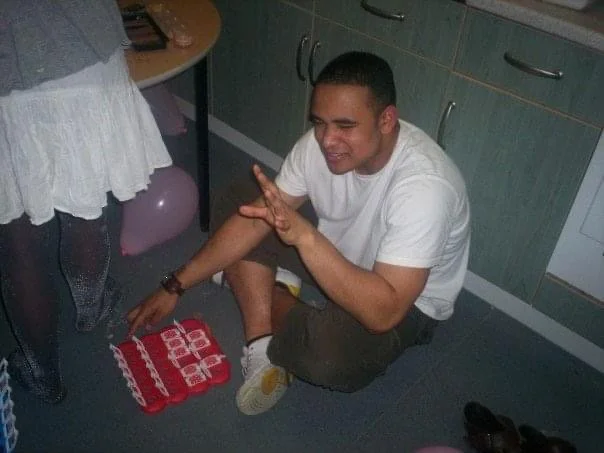
Developing my interpersonal skills in an unsupervised social environment.
I recognise that I enjoyed certain advantages. I had relatively liberal parents, and being male, tall and broad from a young age afforded me a degree of physical confidence and security that others might not have experienced in those same environments.
We were also, in hindsight, fortunate. My friends were, for the most part, reasonably responsible (by teenage standards, at least), and despite some questionable decisions, we generally came through those experiences without any serious harm.
But when I reflect on those years, I think about how much of my personal and social development took place in those largely unstructured and unsupervised environments.
We encountered people from different backgrounds, navigated unfamiliar situations, developed friendships, experienced rejection, managed disagreements, made mistakes and learnt a great deal about ourselves and others. We developed a degree of independence, resourcefulness and an understanding of the social complexities of the world around us.
There was also something quite special about leaving the house on a Friday evening without knowing who you might meet, where you might end up or what experiences the weekend might bring.
I have wondered recently how different my adolescence might have been had I been born twenty-five years later.
Would those friendships have developed in quite the same way? Would I have spent those Friday evenings at home, interacting with many of the same people through a games console or social media? Would I have been safer? Quite possibly, in some respects. But would I have benefited from the same opportunities for personal and social development?
Of course, there is a danger in looking back at our own adolescence through a nostalgic lens. Today's young people are forming relationships and developing social skills in ways that were largely unavailable to my generation, and we should be careful not to dismiss the value of those experiences simply because they differ from our own.
Nevertheless, the apparent decline in opportunities for spontaneous, face-to-face social interaction raises some interesting questions, particularly when considered alongside the significant reductions we have seen in youth offending and violent crime.
Changing behaviour or changing opportunities?
The way in which young people socialise has changed considerably over recent decades. According to the Office for National Statistics, by 2014–15, 18-year-olds were spending almost half an hour less each day socialising than their counterparts at the beginning of the millennium.
Research into UK adolescents found that the proportion meeting friends in person every evening fell from approximately 34% in 2002 to 24% in 2010. More recently, figures from the Night Time Industries Association suggest that Britain has lost more than a third of its nightclubs since the pandemic.
Meanwhile, ONS research published in 2026 found that a quarter of children aged 10 to 15 spent seven or more hours a day online at weekends.
Over a period of significant change in our social habits, we have also seen considerable reductions in crime.
Incidents of violence measured through the Crime Survey for England and Wales have fallen by approximately 79% since 1995. The number of children entering the criminal justice system for the first time fell by 62% between 2014 and 2024.
So, to what extent might these developments be related?
In 2025, criminologists Dietrich Oberwittler and Robert Svensson published a review of international research into declining youth crime. Among the strongest predictors identified were reductions in alcohol consumption and in young people spending unstructured time socialising with their peers.
This is consistent with an established area of criminological research known as routine activity theory, which considers how our everyday activities influence the circumstances and opportunities in which crime occurs. It raises an interesting question about how we interpret declining crime rates. To what extent are they reflective of positive changes in people's attitudes and behaviour, and to what extent might they be reflective of changes in the environments in which people spend their time?
Of course, reducing opportunities for offending is an entirely legitimate and valuable means of crime prevention. There is no suggestion here that we should encourage irresponsible drinking, drug use or expose young people to greater risks in the interests of social development. However, there is perhaps a wider discussion to be had about what we might be losing alongside those risks.
What does societal progress look like?
Imagine, for a moment, a society in which interpersonal violence is virtually eradicated because people spend so little time physically interacting with one another. Our leisure activities, friendships, working lives and even our conflicts are conducted almost entirely through screens.
Measured against traditional violent crime statistics, this might appear to be an extraordinary achievement. But would we necessarily consider it the kind of society in which we would want to live?
Research published in the European Journal of Epidemiology in November 2026 found that, between 2009 and 2024, several risk-taking behaviours and conduct problems among UK adolescents declined, while the prevalence of emotional problems more than doubled.
The World Health Organization has also highlighted the significant health and societal consequences of loneliness and social isolation, with approximately one in five adolescents and young adults globally experiencing loneliness.
These findings do not establish a causal relationship between falling crime and deteriorating emotional wellbeing. Nor should we assume that spending more time online necessarily equates to social isolation. They do, however, illustrate the importance of looking beyond individual measures of societal progress.
There are certain qualities that we tend to value enormously in people: empathy, good judgement, an appreciation of different perspectives, the ability to navigate disagreements, the confidence to challenge others and the capacity to recognise when we have got something wrong and repair a relationship.
To what extent are these qualities developed through the experience of navigating the complexities of human interaction, including those interactions that are uncomfortable, challenging or imperfect?
And as the environments in which we socialise change, are we giving sufficient consideration to how we create opportunities for people to develop those qualities?
What does this tell us about workplace culture?
For those wondering how these somewhat self-indulgent reflections on my teenage escapades in East London have found their way onto the EthicsVision website, you will perhaps be relieved to know that I am now going to bring this back to the world of workplace culture and investigations.
When seeking to understand the health of an organisational culture, we tend to devote a considerable amount of attention to the occasions on which things have gone wrong. We examine grievances, whistleblowing reports, disciplinary cases, allegations of bullying and harassment, and the findings of workplace investigations. These can all provide valuable insights into behaviours, relationships, leadership and the wider organisational environment.
There is, of course, a separate discussion to be had about the extent to which the volume of such reports tells us anything about the health of a workplace culture. Is a high number of whistleblowing reports indicative of a culture in which people feel empowered to speak up, or one in which employees feel unable to raise concerns openly through everyday conversations with their managers? Equally, what should we infer from an organisation receiving no reports at all? Perhaps a subject for another article.
What interests me here is the extent to which our understanding of workplace culture is informed by instances of wrongdoing, and whether we devote enough attention to understanding the quality of the everyday interactions, experiences and relationships between people within an organisation.
Our working environments have changed significantly in recent years. Remote and hybrid working have become commonplace in many sectors, and for some employees, interactions with colleagues are now largely confined to scheduled meetings, emails and instant messaging platforms.
The informal conversations that once took place over lunch, in communal areas, walking between meetings or over a drink after work may occur far less frequently. Some of these interactions, particularly in environments involving alcohol, have historically given rise to inappropriate behaviour, complaints and investigations. There are good reasons for organisations to consider how they manage those risks.
Yet these informal interactions also served an important purpose. They allowed people to develop relationships beyond the immediate requirements of their roles, exchange ideas, better understand their colleagues and, importantly, share concerns that they might not otherwise feel comfortable raising.
For a junior employee, an informal conversation with a more experienced colleague may be the first opportunity to explore whether something they have experienced or witnessed is acceptable. It might also provide an opportunity to seek advice, learn from someone else's experiences or develop the confidence to challenge a decision.
How easily can those interactions be replicated in a working environment where communication is increasingly scheduled, task-focused and conducted remotely?
I also wonder about the experiences of younger people entering the workforce today. For those whose adolescence has involved fewer opportunities for spontaneous, face-to-face social interaction, what opportunities will their working environments provide for further social and interpersonal development?
We often expect employees to demonstrate emotional intelligence, sound judgement, resilience and the ability to manage difficult interpersonal relationships. Perhaps we should give greater consideration to the environments and experiences through which we expect people to develop these skills.
Understanding organisational silence
Throughout my career, from criminal investigations to workplace investigations and whistleblowing, I have been interested in what motivates people to challenge wrongdoing, and what prevents them from doing so.
According to the CIPD's 2024 Good Work Index, a quarter of UK employees had experienced some form of workplace conflict in the preceding year. Among those who had experienced conflict, 47% had chosen simply to let the matter go. Many of those experiences will never appear in the management information presented to an organisation's leadership.
A reduction in complaints could indicate that behaviours have improved. Equally, it could reflect fewer opportunities for interpersonal conflict, a lack of confidence in reporting mechanisms, fewer informal opportunities to discuss concerns, or a growing sense of detachment from the organisation itself.
An employee who feels invested in their organisation, cares about its reputation and trusts their colleagues may be more inclined to challenge behaviour or decisions that they believe are wrong. An employee who feels little connection to their organisation may simply choose to disengage, remain silent or eventually leave. From a purely statistical perspective, the second employee may generate considerably less work for HR or an investigations team. But which of these employees would we rather have within our organisation?
There is also a distinction to be made between harmful conflict and constructive disagreement. An environment in which people are comfortable expressing different opinions, challenging established practices and questioning decisions may, on the surface, appear less harmonious than one in which people rarely disagree.
Yet that willingness to engage with one another, even when doing so creates discomfort, can be an important characteristic of a healthy and ethical organisational culture.
What should we be measuring?
Alongside monitoring incidents of wrongdoing and how they are addressed, organisations should be looking for evidence of the positive characteristics they wish to cultivate. For example:
Do employees feel a genuine sense of belonging and connection to their colleagues and the organisation?
Are people comfortable expressing disagreement, challenging decisions and having difficult conversations?
Are employees developing meaningful professional relationships beyond their immediate teams?
Do junior employees have access to informal support, mentoring and trusted colleagues?
Are people willing to intervene when they witness inappropriate behaviour?
Do employees believe that raising concerns can lead to meaningful improvements?
Are individuals able to acknowledge mistakes without an undue fear of repercussions?
When disagreements occur, are people equipped to navigate them constructively and maintain or repair their relationships?
Do employees care sufficiently about the organisation and the people within it to want to influence its culture?
These are admittedly more difficult characteristics to measure than the number of grievances submitted in a financial year. But they may tell us considerably more about the strength and sustainability of an organisational culture.
None of this requires organisations to return to traditional office-based working models or revive the alcohol-centred workplace social culture of previous decades. Flexible working has brought considerable benefits, and there are many aspects of traditional workplace social culture that were exclusionary or inaccessible to some employees.
It does, however, require us to think deliberately about how we create environments in which people can develop relationships, build trust, learn from one another and navigate differences respectfully.
Beyond the absence of wrongdoing
I would not necessarily want my own child to experience some of the risks I exposed myself to during those teenage years in East London. But I would certainly want them to experience the independence, friendships, sense of adventure, human connection and opportunities for personal development that came with them.
The challenge, both for society and for our workplaces, is how we retain and cultivate those positive experiences while continuing to reduce the risk of harm.
Perhaps we need to give as much consideration to the positive characteristics we are seeking to develop as we do to the negative behaviours we are seeking to eliminate.
We should aspire to live and work in environments where people interact freely, form meaningful relationships, feel a sense of belonging and treat one another with respect.
When assessing our progress towards that ambition, there is a question worth asking: Are we creating environments in which people are increasingly capable of interacting well with one another, or environments in which they simply have fewer opportunities to interact badly?
The absence of wrongdoing is a valuable measure of progress. But it can only ever tell us part of the story.
Pssst… whilst you're here!
If this article has got you thinking about workplace culture, how organisations respond to wrongdoing and what we can learn from one another, why not come and continue the conversation with us?
On 11 March 2027, we're bringing together professionals from across HR, workplace investigations, employee relations, legal, compliance and safeguarding for our Bridging the Gap: HR & Workplace Investigations Conference at Kings Place, London.
In keeping with the theme of this article, it's also an opportunity to step away from our screens, meet people from different professional backgrounds, exchange ideas, challenge perspectives and build some meaningful human connections!
Find out more about the conference, our fantastic line-up of speakers and how to book your place.
